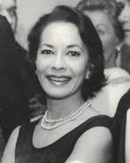
Ruth Ann Koesun, a principal dancer in American Ballet Theater who epitomized the company’s early eclectic profile by excelling in roles that ranged from Billy the Kid’s Mexican sweetheart to the “Bluebird” pas de deux from “The Sleeping Beauty,” died on Feb. 1 in Chicago. She was 89.
Her death was confirmed by her goddaughter, Ellen Coghlan.
Because of her lyrical style in ballets like “Les Sylphides,” Ms. Koesun was often cast as a Romantic ballerina. But she could also show dramatic ferocity, as the evil antiheroine Ate in Antony Tudor’s “Undertow,” which depicts a young murderer’s development.
Contemporary ballet makers favored her. In 1950, Herbert Ross, a new choreographer and future film director, cast her in his “Caprichos,” based on Goya’s etchings. She portrayed a dead woman who is tossed around by her partner in choreographed movements that suggested she was inert.
She found her signature role in Ballet Theater’s revivals of Eugene Loring’s “Billy the Kid,” from 1938. A brilliantly stylized experimental work that used occasional speech, the ballet had a biographical plotline by Lincoln Kirstein (who would become a founder of New York City Ballet), and a double role for Ms. Koesun, who portrayed both the sweetheart and the mother of the outlaw Billy.
ADVERTISEMENT
Her mix of hidden virtuosity and tender emotion complemented the power of John Kriza, her frequent ballet partner, as Billy. Both performed the ballet with the company before President John F. Kennedy and the first lady, Jacqueline Kennedy, at the White House on May 22, 1962.
Ruth Ann Koesun was born on May 15, 1928, in Chicago to Dr. Paul Z. Koesun, a Chinese physician in Chicago’s Chinatown, and the former Mary Mondulick, who was of Russian descent.
She met Mr. Kriza, later a Ballet Theater star, while studying at the Chicago ballet school directed by Bentley Stone and Walter Camryn, and performed with him in nightclubs and summer stock.
Ms. Koesun joined the company in 1946 while it was appearing in London and advanced quickly to principal dancer. She retired from Ballet Theater in 1969. Her marriage to Eric Braun, a principal dancer with the troupe, ended in divorce after eight years.
Image
Ms. Koesun and Michael Lland in David Lichine’s “Graduation Ball” in 1956.CreditMaurice Seymour
Ms. Koesun, who lived in Chicago, leaves no immediate survivors.
Her first years in the company were auspicious. The cover of the Nov. 3, 1947, issue of Life magazine consisted of a double portrait of two young Ballet Theater dancers, Ms. Koesun and Melissa Hayden.
ADVERTISEMENT
Rarely had a novice received such rave reviews as those that greeted Ms. Koesun in May of that year for her role in Ballet Theater’s “On Stage!” Michael Kidd, the future Broadway and Hollywood choreographer, had cast her as a very young dancer suffering from stage fright at a rehearsal.
“It was little Ruth Ann Koesun who captured all hearts last night,” the critic John Martin wrote in The New York Times. He praised her “lovely line” and “immeasurable charm.”
Walter Terry, the dance critic for The New York Herald Tribune, wrote later that year that Ms. Koesun’s progress “has been so rapid” and hailed “her highly individual quality of movement, shy but not weak, delicate but assured.”
“She had a unique style,” Richard Covello, an arts writer in Chicago who followed Ms. Koesun’s career closely, said in a telephone interview, noting her hidden technical strengths. “She was a strong dancer locked in the dainty,” he said.
In 1951, Mr. Martin wrote of her “exquisite dancing” in the “Bluebird” pas de deux with the French guest star Jean Babilée, adding that he wondered why “a dancer of these potentialities does not always exhibit them.”
Over the years, Ms. Koesun’s other partners included Erik Bruhn, and her repertoire included Mr. Tudor’s “Dim Lustre,” David Lichine’s “Graduation Ball,” Bronislava Nijinska’s “La Fille Mal Gardée,” Frederick Ashton’s “Les Patineurs” and new works as well, among them Mr. Babilée’s “Till Eulenspiegel.”
She performed often in Jerome Robbins’s early ballets, including “Fancy Free” and “Interplay.” Mr. Covello said that she was the only dancer to perform each of the three female roles in “Fancy Free.” This was thanks to a fluke.
ADVERTISEMENT
The ballet ends with three sailors chasing a young woman who appears very briefly onstage after the two main women in the ballet have left. In previous performances, Ms. Koesun had danced each of the two main female roles. On this occasion, she was in the wings when the third woman was late and did not appear.
“So,” Mr. Covello said, “Ruth Ann went back onstage and did the part.”
Koesun, Ruth Ann, age 89, of Chicago passed away Feb. 1, 2018 of natural causes. Devoted daughter of the late Dr. Paul Z. Koesun, a distinguished physician for many years in Chicago's Chinatown, and Mary M. Koesun (nee Mondulick). Loving cousin of the late Loring and Dr. Moyra Moy of San Francisco. Dear friend of many including Mary Jane and Ted Fudacz, Susan and David Ruder, Jack Hackman, Richard "Dick" Covello, Barbara Pekow, Alison Hinderliter, Kerri Burkhardt, Barbara Landis and Michael Kramer. Loving godmother of Ellen (Hon. Matthew) Coghlan. Graduate of Mercy High School Class of 1945. Ruth Ann was a Principal Ballerina of Ballet Theatre, now known as American Ballet Theatre from 1946 to 1969 traveling extensively around the world. She debuted on July 4, 1946 at London's Royal Opera House and would go on to win international acclaim for her lyrical interpretations of many roles. Ms. Koesun was described as having a graceful yet assured technique and a sensitive feel for characterization, which along with her "porcelain-princess" beauty made her a popular and widely known performer. She, along with Melissa Hayden, were photographed by Philippe Halsman and appeared on the cover of Life magazine in 1947. She taught master classes and was associated with her beloved John Kriza in ABT productions, in summer stock, and in the famous "Salute" shows at the College Inn in Chicago and the New Yorker Hotel. After retiring from American Ballet, Ms. Koesun was co-director of the Dance Department at Hull House Association and danced as principal ballerina with First Chamber Dance Company of New York, 1971-73, then became Executive Director of the Association of Illinois Dance, 1975-79. Ms. Koesun also worked as performing arts archivist at The Newberry Library, 1989-present, as a member of the dance panel of the Illinois Arts Council, Chicago, and as Administrative Assistant for Chamber Opera Chicago. Ms Koesun was a recipient of the Excellence Award in performing arts from the Organization of Chinese Americans, 1985. Visitation Saturday February 17, 2018 at 9:00 a.m. until time of Mass 10:30 a.m. at Holy Name Cathedral, 730 N. State Street, Chicago, IL. Interment at a later date. In lieu of flowers memorials can be made to St. Therese Chinese Catholic Church, Chicago. www.sttheresechinatown.org. Arrangements entrusted to the Original Lamb Family Funeral & Cremations Service. For info call 708-710-9549.
Jahangir, Asma Asma Jilani Jahangir (Urdu: عاصمہ جہانگیر, transliteration 'Asimah Jahangir, January 27, 1952 – February 11, 2018) was a Pakistani human rights lawyer and social activist who co-founded and chaired the Human Rights Commission of Pakistan. She was widely known for playing a prominent role in the Lawyers' Movement and served as the United Nations Special Rapporteur on Freedom or Belief and as a trustee at the International Crisis Group.
Born and raised in Lahore, Jahangir studied at the Convent of Jesus and Mary before receiving her B.A. from Kinnaird and LLB from the Punjab University in 1978. In 1980, she was called to the Lahore High Court, and to the Supreme Court in 1982. In the 1980s, Jahangir became a democracy activist and was imprisoned in 1983 for participating in the Movement for the Restoration of Democracy against the military regime of Zia-ul-Haq. In 1986, she moved to Geneva, and became the vice-chair of the Defence for Children International and remained until 1988 when she moved back to Pakistan.
In 1987, Jahangir co-founded the Human Rights Commission of Pakistan and became its Secretary General until 1993 when she was elevated as the commission's chairperson. She was again put under house arrest in November 2007 after the imposition of emergency. After serving as one of the leaders of the Lawyers' Movement, she became Pakistan's first woman to serve as the President of Supreme Court Bar Association. She co-chaired South Asia Forum for Human Rights and was the vice president of International Federation for Human Rights. Jahangir served as the United Nations Special Rapporteur on Freedom of Religion from August 2004 to July 2010, including serving on the United Nations panel for inquiry into Sri Lankan human rights violations and on a fact-finding mission on Israeli settlements. In 2016, she was named as the United Nations Special Rapporteur on the Situation of Human Rights in Iran, remaining until her death in February 2018.
Jahangir's prominent writings include The Hudood Ordinance: A Divine Sanction? and Children of a Lesser God.
Fatma Ahmed Kamal Shaker (Arabic: فاطمة أحمد كمال), better known by her stage name Shadia (b. February 8, 1931, Sharqia Governorate, Egypt – d. November 28, 2017, Cairo, Egypt), was an Egyptian actress and singer. She was famous for her roles in light comedies and drama in the 1950s and 1960s. Her first appearance was in the film el-Aql Fi Agaza (The Mind on Vacation), and she retired after her last film La Tas'alni Man Ana (Don't Ask Me Who I Am).
Born Fatma Ahmed Kamal Shaker in 1931, in the Sharqia Governorate, in Egypt. Her father, Ahmed Kamak Shaker, was an Upper Egyptian man whose family moved to El Sharqia and her mother was from a family of both Egyptian and Turk origin. She began acting at the age of thirteen.
Shaker was given the stage name "Shadia" by the film director Helmy Rafla. In her heyday during the 1950s and 1960s, Shadia acted in numerous melodramas, romance, and comedy films. However, it was her musical talent as a singer that established Shadia as one of the most important Egyptian cinema stars of her era.
Overall, as "Shadia", she performed in more than 100 films. She starred in more than 30 films with the actor Kamal el-Shennawi, and sang opposite Farid al-Atrash and Abdel Halim Hafez, such as in "The People's Idol" (1967). She also appeared with Faten Hamama in "An Appointment with Life" (1954), and in "The Unknown Woman" (1959) she played the role of Fatma in a heavy melodrama. Other notable films she starred in include "The Thief and the Dogs" (1962) and in her comedy roles in films "Wife Number 13" (1962) and "My Wife the General Manager" (1966). Indeed, Shadia was often cast in cunning and cheeky roles, however, she also played serious roles, such as in "The Road" (1964), and in the stage version of "Raya and Sakina", which was based on the true story of two Alexandrian serial killers and directed by Hussein Kama (1953).
After retiring from acting, Shadia joined a number of Egyptian actresses who took on the veil (hijab) in an act of Islamic resistance and salvation.
Shadia is considered one of the most popular and most talented singers and actresses in the Arabic movie and entertainment industry. Her songs and movies are still sought after, and her songs are popular among all generations.
Shadia was hospitalized on November 4, 2017 after suffering a massive stroke in Cairo. She was placed under intensive care. Her nephew, Khaled Shaker, said during a televised phone conversation that she recovered from the stroke and could identify her relatives and the people around her. He added, however, that her illness was complicated by pneumonia, despite her recovery. Shadia's condition stabilized on November 9, and President Abdel Fattah el-Sisi visited her that day at Al-Galaa Hospital.
On November 28, 2017, Shadia died from respiratory failure caused by the pneumonia.
Marina Ratner, Émigré Mathematician Who Found Midlife Acclaim, Dies at 78
Photo
Marina Ratner in 2011.CreditLeonid Ryzhik
Marina Ratner, an influential mathematician and Russian-Jewish émigré who defied the notion that the best and the brightest in her field do their finest work when they are young, died on July 7 at her home in El Cerrito, Calif. She was 78.
The cause was cardiac arrest, said her daughter, Anna Ratner.
Friends and colleagues have said that Dr. Ratner started as a good but unexceptional mathematician. “The beginning of her career was not particularly promising,” said Anatole Katok, of Pennsylvania State University, who met her in the early 1960s when both lived in the Soviet Union.
A common belief is that a mathematician who does not do great work by age 40 never will. But Dr. Ratner was about that age when she set off on an ambitious effort to connect the physics of the motion of objects with more abstract ideas of number theory.
She proved her most influential theorem after she turned 50.
“She struggled and went unrecognized for a long time,” said Artur Avila, a mathematician at the French National Center for Scientific Research in Paris and the Institute for Pure and Applied Mathematics in Rio de Janeiro. “She is also one of the main examples to counter the myth that mathematics is a young person’s game.”
Amie Wilkinson, of the University of Chicago, pointed to the classic video game “Asteroids” to explain Dr. Ratner’s work.
“When an object crosses the right edge of the screen, it instantaneously appears on the left edge of the screen moving in the same direction,” Dr. Wilkinson said in an email. “The simplest case of Ratner’s Theorem applies to the motion of objects in the ‘Asteroids’ game. If an object moves in a straight line indefinitely without turning, there are only two possibilities: Either it will return to its initial position and repeat its path indefinitely, or it will never return to its initial position and instead will visit every possible region of the space.”
Dr. Ratner showed that for a higher dimensional, more complicated video game, an equivalent statement was true.
Her dynamics research helped unravel mathematical problems that had resisted more direct, traditional approaches of attack.
Dr. Avila said Dr. Ratner’s work had been the basis for that of younger mathematicians like Elon Lindenstrauss and Maryam Mirzakhani, two winners of the Fields Medal, the most prestigious honor in mathematics. Dr. Mirzakhani, the first woman to win a Fields, also died this month.
“What is remarkable about these results of Ratner is how many unexpected applications they had,” Dr. Lindenstrauss said in an email. “It is almost as if this dynamical fact was a philosopher’s stone that allowed many mathematicians to show quite remarkable things, in remarkably diverse situations.”
Marina Ratner was born on Oct. 30, 1938, in Moscow, the daughter of scientists. She graduated from Moscow State University in 1961. She then worked for four years as an assistant for Andrey Kolmogorov, a prominent Russian mathematician, before attending graduate school at Moscow State. She completed her doctorate in 1969.
When she applied for a visa to leave the Soviet Union for Israel, Dr. Ratner was pressured to leave a teaching job at the High Technical Engineering School in Moscow, Anna Ratner said.
“She had a very hard time in Russia,” said Alexandre Chorin, a colleague at the University of California, Berkeley. “The Russians took a variety of steps to penalize her.”
Dr. Ratner and her daughter immigrated to Israel in 1971, where she was a lecturer at the Hebrew University of Jerusalem. She was able to pursue her mathematical research but was unable to find a permanent position.
Her work caught the attention of Rufus Bowen, however, at Berkeley, and he lobbied the university to hire her. It did, in 1975, initially for a temporary position, and even that, given her relatively meager record, was controversial in the department. She eventually became a tenured professor.
Dr. Ratner was a member of the American Academy of Arts and Sciences and the National Academy of Sciences.
In addition to her daughter, she is survived by two grandchildren.
A marriage to Alexander Samoilov ended in divorce.
Dr. Ratner’s style of working may have contributed to her not receiving as much acclaim as some thought she deserved. She always worked alone. At Berkeley, she earned high marks as a teacher of undergraduates but taught only one graduate student.
She also did not always do the best job of promoting her achievements.
Étienne Ghys, a mathematician at École Normale Supérieure de Lyon in France, recalled spending six months trying to understand the results of her dynamics research to present them at a seminar. When he discussed the papers with her, he told her that he had the feeling that she had written the papers not for other mathematicians to understand but mainly to convince herself that the theorems were correct.
Dr. Ghys said Dr. Ratner replied: “Yes! Exactly! You understood why and how I write mathematics.”
With Snowflakes and Unicorns, Marina Ratner and Maryam Mirzakhani Explored a Universe in Motion
The legacies and achievements of two great mathematicians
will dazzle and intrigue scholars for decades.
The mathematics section of the National Academy of Sciences lists 104 members. Just four are women. As recently as June, that number was six.
Marina Ratner and Maryam Mirzakhani could not have been more different, in personality and in background. Dr. Ratner was a Soviet Union-born Jew who ended up at the University of California, Berkeley, by way of Israel. She had a heart attack at 78 at her home in early July.
Success came relatively late in her career, in her 50s, when she produced her most famous results, known as Ratner’s Theorems. They turned out to be surprisingly and broadly applicable, with many elegant uses.
In the early 1990s, when I was a graduate student at Berkeley, a professor tried to persuade Dr. Ratner to be my thesis adviser. She wouldn’t consider it: She believed that, years earlier, she had failed her first and only doctoral student and didn’t want another.
I first heard about Dr. Mirzakhani when, as a graduate student, she proved a new formula describing the curves on certain abstract surfaces, an insight that turned out to have profound consequences — offering, for example, a new proof of a famous conjecture in physics about quantum gravity.
I was inspired by both women and their patient assaults on deeply difficult problems. Their work was closely related and is connected to some of the oldest questions in mathematics.
Photo
Maryam Mirzakhani in 2014, the year she won the Fields Medal.CreditSeoul ICM 2014, via Agence France-Presse — Getty Images
The ancient Greeks were fascinated by the Platonic solid — a three-dimensional shape that can be constructed by gluing together identical flat pieces in a uniform fashion. The pieces must be regular polygons, with all sides the same length and all angles equal. For example, a cube is a Platonic solid made of six squares.
Early philosophers wondered how many Platonic solids there were. The definition appears to allow for infinite possibilities, yet, remarkably, there are only five such solids, a fact whose proof is credited to the early Greek mathematician Theaetetus. The paring of the seemingly limitless to a finite number is a case of what mathematicians call rigidity.
Something that is rigid cannot be deformed or bent without destroying its essential nature. Like Platonic solids, rigid objects are typically rare, and sometimes theoretical objects can be so rigid they don’t exist — mathematical unicorns.
In common usage, rigidity connotes inflexibility, usually negatively. Diamonds, however, owe their strength to the rigidity of their molecular structure. Controlled rigidity — that is, flexing only along certain directions — allows suspension bridges to survive high winds.
Dr. Ratner and Dr. Mirzakhani were experts in this more subtle form of rigidity. They worked to characterize shapes preserved by motions of space.
One example is a mathematical model called the Koch snowflake, which displays a repeating pattern of triangles along its edges. The edge of this snowflake will look the same at whatever scale it is viewed.
The snowflake is fundamentally unchanged by rescaling; other mathematical objects remain the same under different types of motions. The shape of a ball, for example, is not changed when it is spun.
A Koch snowflake. via Wikimedia Commons
Dr. Ratner and Dr. Mirzakhani studied shapes that are preserved under more sophisticated types of motions, and in higher dimensional spaces.
In Dr. Ratner’s case, that motion was of a shearing type, similar to a strong wind high in the atmosphere. Dr. Mirzakhani, with my colleague Alex Eskin, focused on shearing, stretching and compressing.
These mathematicians proved that the only possible preserved shapes in this case are, unlike the snowflake, very regular and smooth, like the surface of a ball.
The consequences are far-reaching: Dr. Ratner’s results yielded a tool that researchers have turned to a wide variety of uses, like illumining properties in sequences of numbers and describing the essential building blocks in algebraic geometry.
The work of Dr. Mirzakhani and Dr. Eskin has similarly been called the “magic wand theorem” for its multitude of uses, including an application to something called the wind-tree model.
More than a century ago, physicists attempting to describe the process of diffusion imagined an infinite forest of regularly spaced identical and rectangular trees. The wind blows through this bizarre forest, bouncing off the trees as light reflects off a mirror.
Dr. Mirzakhani and Dr. Eskin did not themselves explore the wind-tree model, but other mathematicians used their magic wand theorem to prove that a broad universality exists in these forests: Once the number of sides to each tree is fixed, the wind will explore the forest at the same fundamental rate, regardless of the actual shape of the tree.
There are other talented women exploring fundamental questions like these, but why are there not more? In 2015, women accounted for only 14 percent of the tenured positions in Ph.D.-granting math departments in the United States. That is up from 9 percent two decades earlier.
Dr. Ratner’s theorems are some of the most important in the past half-century, but she never quite received the recognition she deserved. That is partly because her best work came late in her career, and partly because of how she worked — always alone, without collaborators or graduate students to spread her reputation.
Berkeley did not even put out a news release when she died.
By contrast, Dr. Mirzakhani’s work, two decades later, was immediately recognized and acclaimed. Word of her death spread quickly — it was front-page news in Iran. Perhaps that is a sign of progress.
I first met Dr. Mirzakhani in 2004. She was finishing her Ph.D. at Harvard. I was a professor at Northwestern, pregnant with my second child.
Given her reputation, I expected to meet a fearless warrior with a single-minded focus. I was quite disarmed when the conversation turned to being a mathematician and a mother.
“How do you do it?” she asked. That such a mind could be preoccupied with such a question points, I think, to the obstacles women still face in climbing to math’s upper echelons.
At Harvard, the number of tenured women research mathematicians is currently zero. At my institution, the University of Chicago, until 2011 only one woman had ever held such a position.
We are only gradually joining the ranks, in what might be called a “trickle up” fashion.
Students often tell me that my presence on the faculty convinces them that women belong in mathematics. Though she would have shrugged it off, I was similarly inspired by Dr. Ratner.
I hope I played this role for Dr. Mirzakhani. And for all of her reticence about being famous, Dr. Mirzakhani has inspired an entire generation of younger women.
There are a surprising number of social pressures against becoming a mathematician. When you’re in the minority, it takes extra strength and toughness to persist. Dr. Ratner and Dr. Mirzakhani had both.
For the inspiration they provide, but above all for the beauty of their mathematics, we celebrate their lives.